

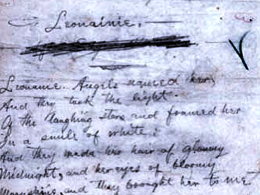
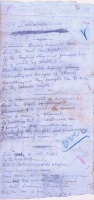
 Under the heading "Posthumous Poetry," Indiana's Kokomo Dispatch published a poem titled "Leonainie" on August 3, 1877. It was an unremarkable poem except in one way. The editor of the Dispatch, John Henderson, claimed it was a previously unpublished poem by Edgar Allan Poe. (Click here to read the poem.)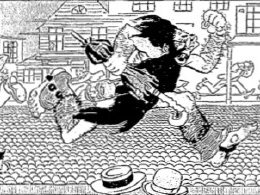
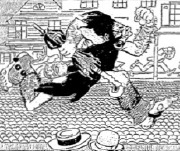 In August 1895 New York City papers received a wire story about a naked, hairy man that was terrorizing townspeople in Winsted, Connecticut. Intrigued, the papers sent reporters up to Winsted to find out what was happening.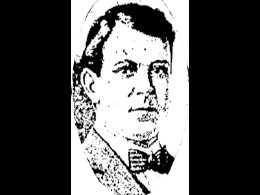
 Louis Timothy Stone (1875-1933), more popularly known as Lou Stone, or the Winsted Liar, was a journalist famous for the hundreds of fanciful articles he wrote about the strange flora and fauna surrounding his hometown of Winsted, Connecticut. It was said he had a "faculty for seeing the unusual in stories."
More…
Louis Timothy Stone (1875-1933), more popularly known as Lou Stone, or the Winsted Liar, was a journalist famous for the hundreds of fanciful articles he wrote about the strange flora and fauna surrounding his hometown of Winsted, Connecticut. It was said he had a "faculty for seeing the unusual in stories."
More…
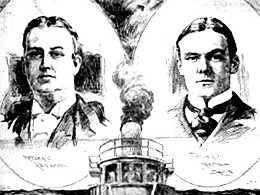
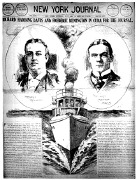 William Randolph Hearst, owner of the New York Journal, had a reputation for never letting truth get in the way of a good story. According to one famous tale, when hostilities broke out between the Spanish and the Cubans, Hearst sent the illustrator Frederic Remington to Cuba to draw pictures of the conflict. Finding that not much was happening, Remington cabled Hearst in January 1897: "Everything is quiet. There is no trouble here. There will be no war. I wish to return."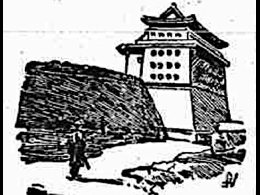
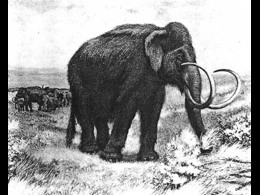
 Woolly mammoths became extinct thousands of years ago. But in October, 1899 a story appeared in McClure's Magazine titled "The Killing of the Mammoth" in which a narrator named H. Tukeman described how he had recently hunted down and killed a mammoth in the Alaskan wilderness.
More…
Woolly mammoths became extinct thousands of years ago. But in October, 1899 a story appeared in McClure's Magazine titled "The Killing of the Mammoth" in which a narrator named H. Tukeman described how he had recently hunted down and killed a mammoth in the Alaskan wilderness.
More…
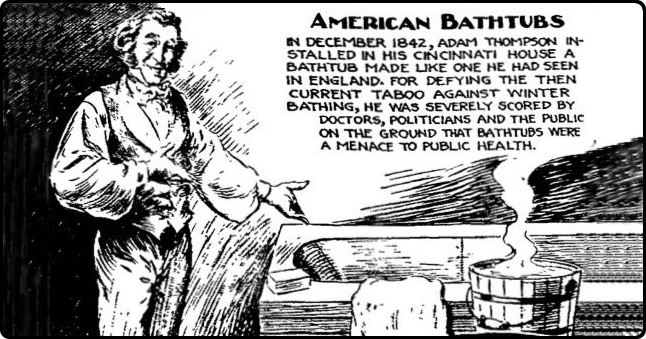

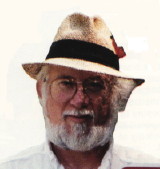 In 1960, twenty-year-old Dan Rattiner started a small paper during his summer vacation in the Hamptons. He gave copies of it away for free, making money from the advertisements. It was the first free paper in the United States. Gradually Dan started more papers, each of them serving a different community in the Hamptons. He called all of them collectively Dan's Papers, and they soon became the most widely read papers in the Hamptons. Dan wrote most of the content himself, but from the start he approached the task with a sense of humor. Many of the stories were humorous hoaxes, which earned him the nickname the "Hoaxer of the Hamptons."
More…
In 1960, twenty-year-old Dan Rattiner started a small paper during his summer vacation in the Hamptons. He gave copies of it away for free, making money from the advertisements. It was the first free paper in the United States. Gradually Dan started more papers, each of them serving a different community in the Hamptons. He called all of them collectively Dan's Papers, and they soon became the most widely read papers in the Hamptons. Dan wrote most of the content himself, but from the start he approached the task with a sense of humor. Many of the stories were humorous hoaxes, which earned him the nickname the "Hoaxer of the Hamptons."
More…





Hoaxes in Newspapers and Magazines